
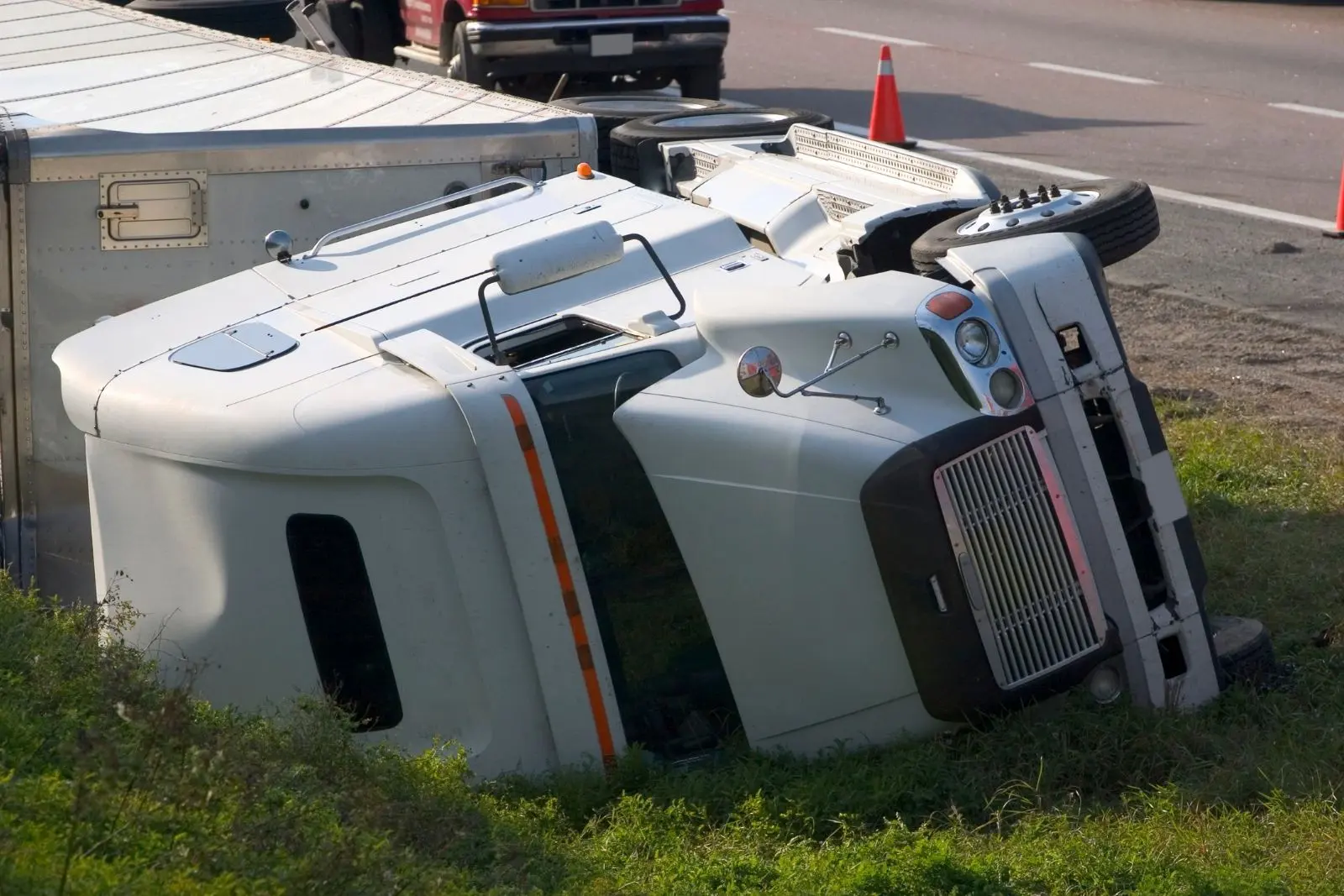
Trucking companies do not wait for a lawsuit. Many send an investigator to the scene within hours of the crash, while the injured person is still in an emergency room. You are entitled to someone working that quickly for you.
Attorney Jordan Stern handles your case personally — the first phone call, the negotiation, and the resolution. He has represented injured New Yorkers for over 30 years. From the office on West Merrick Road in Freeport, Jordan represents people injured by tractor-trailers, box trucks, delivery vans, and other commercial vehicles throughout Nassau and Suffolk County.
Free consultation. No fee unless we recover money for you.
Why is a truck case different from a car accident case?
A commercial carrier is not an ordinary defendant. Trucking companies operate under federal safety regulations that ordinary drivers do not, so violations become evidence of negligence — and their insurance is far larger, with interstate carriers hauling general freight required to carry at least $750,000 and $1 million common. (49 CFR Part 387)
What evidence disappears if nobody demands it?
Much of what proves a truck case is created by the trucking company, held by the trucking company, and lawfully destroyed on a schedule.
Two kinds of electronic record matter and are frequently confused. Most modern tractors carry an electronic control module or telematics system — often called the black box — that may capture speed, braking, and throttle in the seconds before impact. Whether a particular truck recorded it, and for how long, depends on the equipment. The electronic logging device is separate: it records duty status and hours, which shows whether the driver was legally permitted to be driving at all.
The retention clocks are shorter than most people expect:
- Driver vehicle inspection reports — three months (49 CFR § 396.11)
- Records of duty status and supporting documents — six months (49 CFR § 395.8(k))
- Vehicle maintenance and repair files — one year, and six months after the vehicle leaves the carrier's control (49 CFR § 396.3(c))
- Driver qualification file — employment plus three years, covering licensing, medical certification, and prior violations (49 CFR § 391.51)
- Surveillance footage from nearby businesses — often overwritten within days, subject to no retention rule at all
Post-accident drug and alcohol testing is not automatic. It is required after a fatality, and where the driver is cited and someone was treated away from the scene or a vehicle was towed. Alcohol testing must be attempted within two hours and abandoned after eight; drug testing completed within thirty-two. Where a required test wasn't done, the carrier must document why. (49 CFR § 382.303)
A written preservation letter puts the carrier on notice that all of this must be retained. It needs to go out quickly.
Who can be held responsible?
Rarely just the driver. A claim may reach the motor carrier — for the driver's conduct and for its own negligence in hiring, training, or supervising him — plus the owner of the tractor or trailer, a maintenance contractor, whoever loaded the cargo, a freight broker, or a component manufacturer.
Carriers frequently respond that the driver was an independent contractor. That label does not end the inquiry. Federal leasing rules require the lease to state that the carrier has exclusive possession, control, and use of the vehicle and assumes complete responsibility for its operation. (49 CFR § 376.12(c)) Courts weigh that alongside how much control the carrier actually exercised.
Trucks on the parkways — a Long Island problem
Commercial vehicles are prohibited on New York's parkways — on Long Island that covers the Southern State, Northern State, Meadowbrook, Wantagh, Sagtikos, and others. The reason is structural: these roads were built for 1930s automobiles, and the State Department of Transportation has documented clearances as low as 6 feet 11 inches. A standard box truck stands twelve to fourteen feet.
Strikes happen constantly. The Southern State is the most frequently struck corridor in the state, and the Eagle Avenue overpass in Hempstead, at 7 feet 7 inches, is hit roughly three times a year. A recurring cause is a commercial driver following a consumer GPS app rather than one that routes by vehicle height.
These crashes injure people who were nowhere near the bridge — drivers hit by falling debris, or by vehicles stopping short in front of them. And a truck with no legal right to be on that road faces a difficult explanation.
Does no-fault still apply?
Yes. If you were in a passenger vehicle struck by a truck, your own no-fault coverage still pays your initial medical bills and part of your lost earnings, and you still must meet New York's serious injury threshold to recover for pain and suffering. (Insurance Law § 5102(d))
What changes is everything on the other side: more insurance, more potential defendants, and a body of federal regulation with no counterpart in an ordinary car crash. If you were working at the time, you may have both a workers' compensation claim and a separate lawsuit against the trucking company.
How long do I have?
Three years for a personal injury lawsuit, two years for wrongful death. If a government-owned truck was involved — a sanitation truck, a highway vehicle, a municipal bus — a notice of claim is generally due within 90 days and suit within one year and 90 days. (General Municipal Law §§ 50-e, 50-i)
The practical deadline is far shorter. Duty status records can be gone in six months, inspection reports in three.
What if the trucking company says I caused it?
The defenses are predictable: that you cut in front of the truck, that you stopped short, or that you were in a blind spot. Under a 2026 amendment those arguments carry a harder edge than they used to — in a personal injury action subject to the no-fault law, a claimant whose share of the fault is greater than that of the party sued — or, where more than one is sued, greater than their combined share — recovers nothing from that party — not pain and suffering, and not economic losses beyond what no-fault covers — rather than simply recovering less. No-fault benefits themselves are unaffected. (CPLR § 1411(b), effective May 29, 2026)
They are also testable. Where a tractor is equipped with an electronic control module or telematics system, the recorded data can contradict the driver's account of speed and braking — which is one more reason to find out early what the vehicle actually recorded.
Hit by a commercial truck? The evidence has a short life.
Speak with Jordan Stern directly. The consultation is free, and there is no fee unless we recover.
Common questions
Most likely a rapid response investigator working for the trucking company or its insurer. Large carriers deploy them immediately, and anything you said is now in their file.
Not necessarily. Federal leasing rules require the carrier to take responsibility for the operation of leased equipment, and how much control it actually exercised matters as well.
Possibly. Federal rules turn on vehicle weight and the nature of the operation, not on whether something looks like a big rig. Either way, the company that employed the driver can be liable, and commercial policies run well above a personal auto policy.
Call anyway. Some electronic records may be gone, but police reports, medical records, and witness testimony remain, and preservation obligations may still reach what the carrier holds.
Speak with Jordan Stern
If you or a family member was injured by a commercial truck anywhere on Long Island, the consultation is free and the conversation is confidential. The sooner an attorney is involved, the more of the evidence survives.
Stern & Stern · 49 West Merrick Road, Freeport, NY 11520
516-634-0345 · jstern@jordansternlaw.com · Se habla español
Been in an accident? Let's talk today.
Free consultation. No fee unless we recover for you.
Call 516-634-0345